
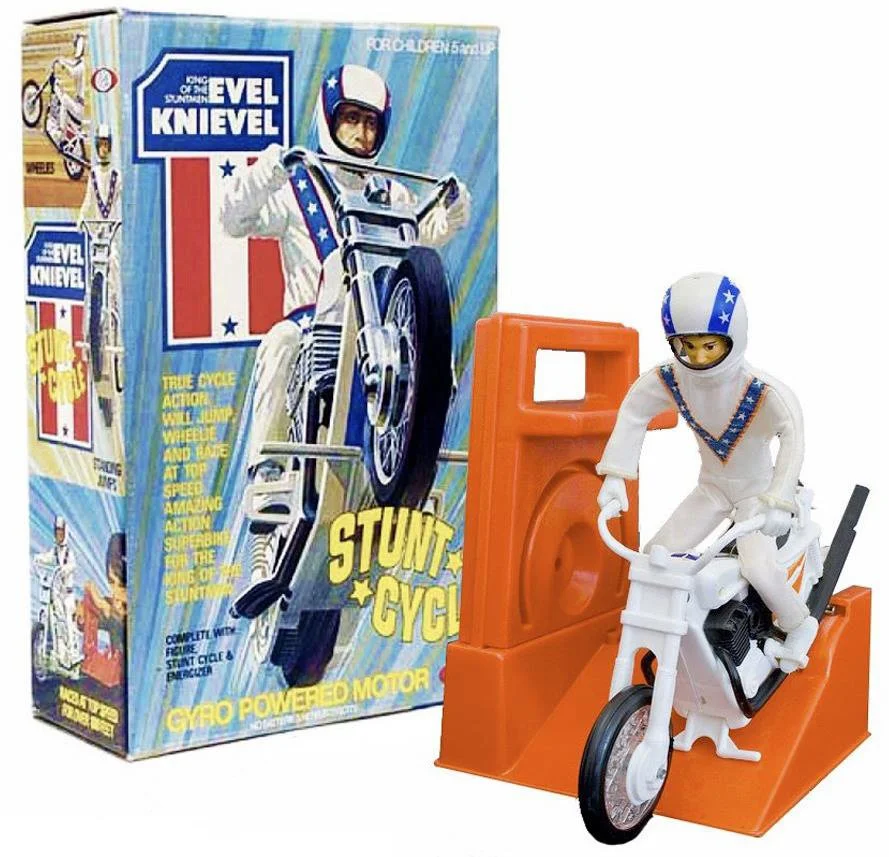
Long before Instagram, YouTube and the creator economy, there was a man in a red, white and blue jumpsuit who understood something remarkable about the commercial power of being a brand.
Evel Knievel made his name jumping motorbikes over buses, cars and seemingly impossible distances. Millions watched, fascinated by the spectacle, the danger and the very real possibility that something might go spectacularly wrong. He was an entertainer, a showman and one of the most recognisable personalities of the 1970s. But while the world was watching his stunts, Knievel was building something arguably even more valuable. A brand that could exist far beyond the man himself.
And one of its biggest successes came in the form of a little plastic motorbike.
In 1973, Ideal Toy Company launched the Evel Knievel Stunt Cycle, a miniature version of the man himself sitting on his famous motorbike, powered by a hand-cranked launcher. Children could recreate their hero's spectacular jumps from their living rooms, sending their own Evel Knievel flying across furniture, over homemade ramps and occasionally into the family television. It became one of the defining toys of the decade, selling millions and introducing an entirely new generation to the Evel Knievel phenomenon.
But the Stunt Cycle was only the beginning.
Knievel's name and image appeared across an extraordinary range of licensed merchandise. There were action figures, stunt vehicles, playsets, bicycles, clothing, helmets, lunchboxes, posters and collectibles. His distinctive red, white and blue identity could be found on products far removed from the ramps and arenas where he'd originally made his name. What started as a man jumping motorbikes had become a commercial world that people could buy into.
And that wasn't an accident.
Knievel understood that his greatest asset wasn't necessarily his ability to jump a motorbike. It was what people believed he represented. Courage, danger, rebellion, spectacle and the possibility of doing something extraordinary. His jumps attracted the audience, but his personality gave them something to connect with. Through licensing, he could translate that connection into products that extended his reach far beyond the next live event or television appearance.
The brilliance of the Stunt Cycle was that it didn't simply carry his name. It recreated the experience that made him famous. Children weren't buying another toy motorbike. They were buying the opportunity to become Evel Knievel. For a few minutes, the living room became Wembley Stadium, the sofa became a ramp and the carpet became a landing strip. The product understood exactly what his audience loved about him and gave them a way to participate in it.
That's what made the wider merchandise collection so powerful. Different products offered different ways to connect with the same personality. A toy allowed children to recreate the stunts. A helmet or item of clothing allowed them to dress like their hero. A poster brought his image into their bedroom. A collectible became something to treasure long after the original excitement had passed. Each product served a different purpose, but together they reinforced the same brand.
And every one of those products created another opportunity for Evel Knievel to exist in somebody's life.
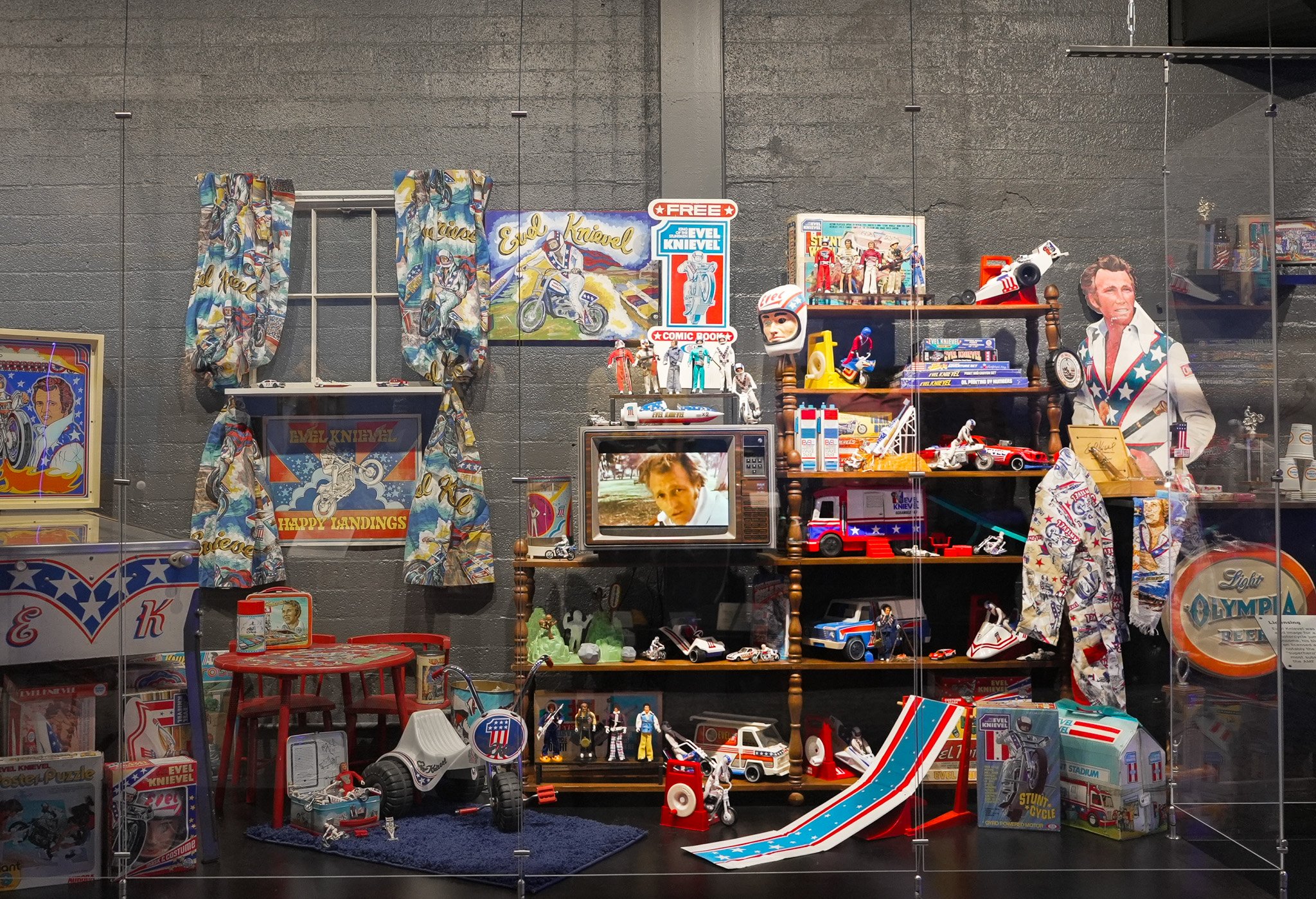
While the real Knievel was preparing for his next jump, miniature versions of him were flying across living rooms around the world. His image was appearing on bedroom walls, his colours were being worn in playgrounds and his name was becoming familiar to people who might never have seen him perform. Merchandise wasn't simply generating revenue from his fame. It was helping build and sustain the fame itself.
That's an important distinction, and one that still gets overlooked today.
Too often, merchandise is treated as something that follows the success of a brand. An opportunity to generate additional revenue, reward an audience or put a familiar logo onto another product. Knievel demonstrated that the relationship could work both ways. His performances created demand for merchandise, but the merchandise also created new audiences, strengthened existing relationships and made his identity part of everyday life.
He had effectively turned his brand into something people could experience without him being there.
There's also something interesting about the sheer breadth of the collection. Knievel didn't restrict his identity to products directly connected to motorbike stunts. Once people had bought into the personality, the opportunity became much bigger. The red, white and blue colours, the stars, the jumpsuit and the unmistakable Evel Knievel name had become symbols in their own right. They communicated an attitude and an identity that could be expressed through all sorts of objects.
That's when merchandising becomes particularly powerful. When people aren't simply buying a product because they need it, but because they want the association that comes with owning it. The object becomes a way of expressing something about themselves. Their interests, their heroes, their values or the culture they identify with.
In many ways, Knievel was doing what today's biggest athletes, musicians, creators and lifestyle brands are still trying to achieve. Building an audience around a distinctive personality, then creating products that allow that audience to become part of the story. The platforms have changed, the distribution has changed and the commercial opportunities have grown enormously, but the principle remains remarkably similar.
And perhaps that's the most interesting part of the Evel Knievel story.
He recognised the value of licensing long before personal brands became the sophisticated commercial businesses we know today. He understood that the right products could extend his identity into new environments, create new revenue opportunities and build relationships with audiences far beyond those watching his next stunt.
He wasn't just selling merchandise. He was creating an entire world around the Evel Knievel name.
More than fifty years later, businesses still regularly underestimate the opportunity. They think of merchandise as an accessory to marketing rather than a way of building the brand itself. They start with a product catalogue instead of asking what their audience might genuinely want to own, wear, collect or experience.
Knievel started with something much more valuable. A personality people believed in, an identity they recognised and a story they wanted to be part of. The products simply gave that story somewhere else to live.
Because the real genius of that little plastic motorbike wasn't the mechanism that sent it flying across the room.
It was the understanding that people didn't just want to watch Evel Knievel.
They wanted to be Evel Knievel.
And he gave them an entire collection of ways to do it.