
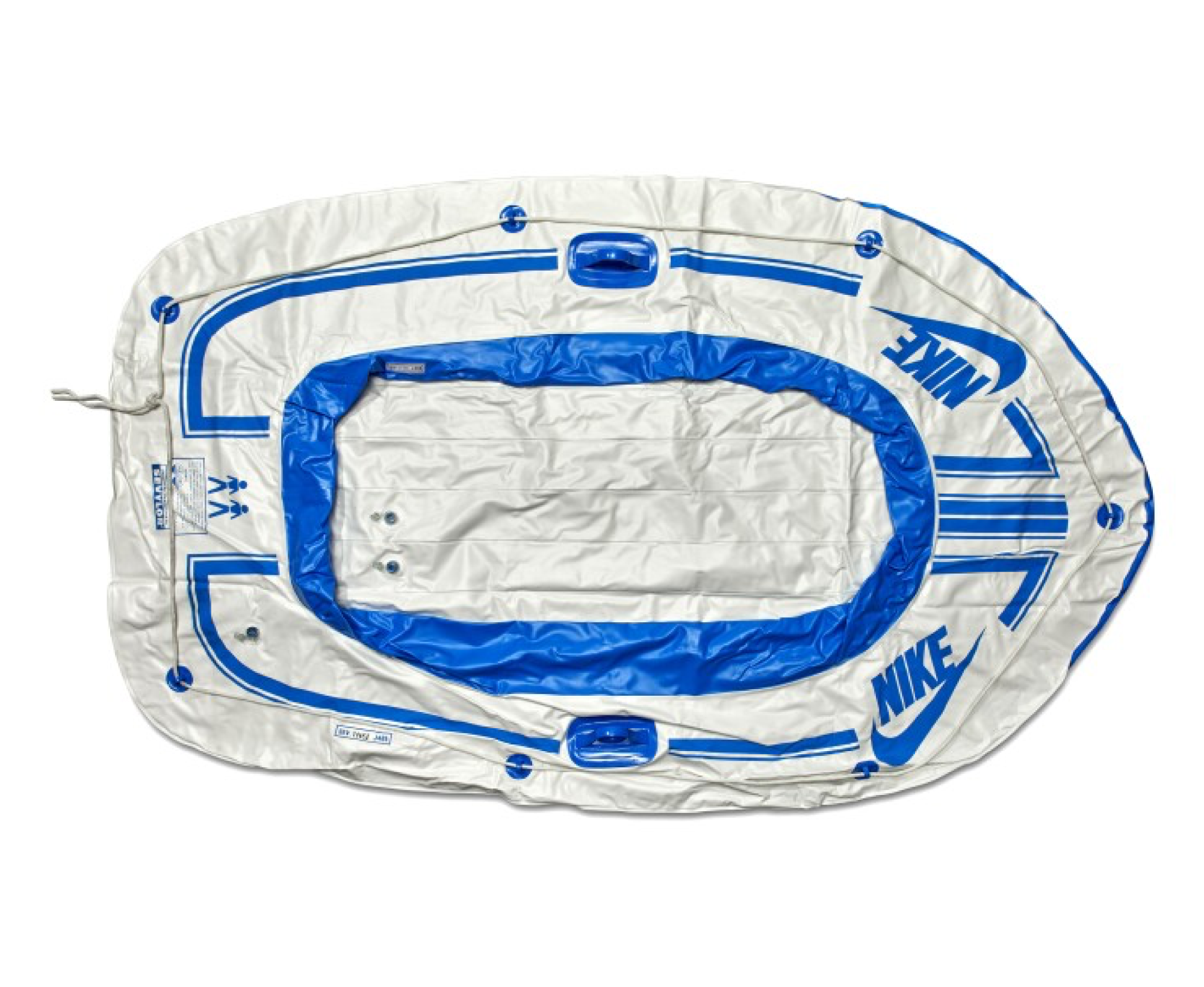
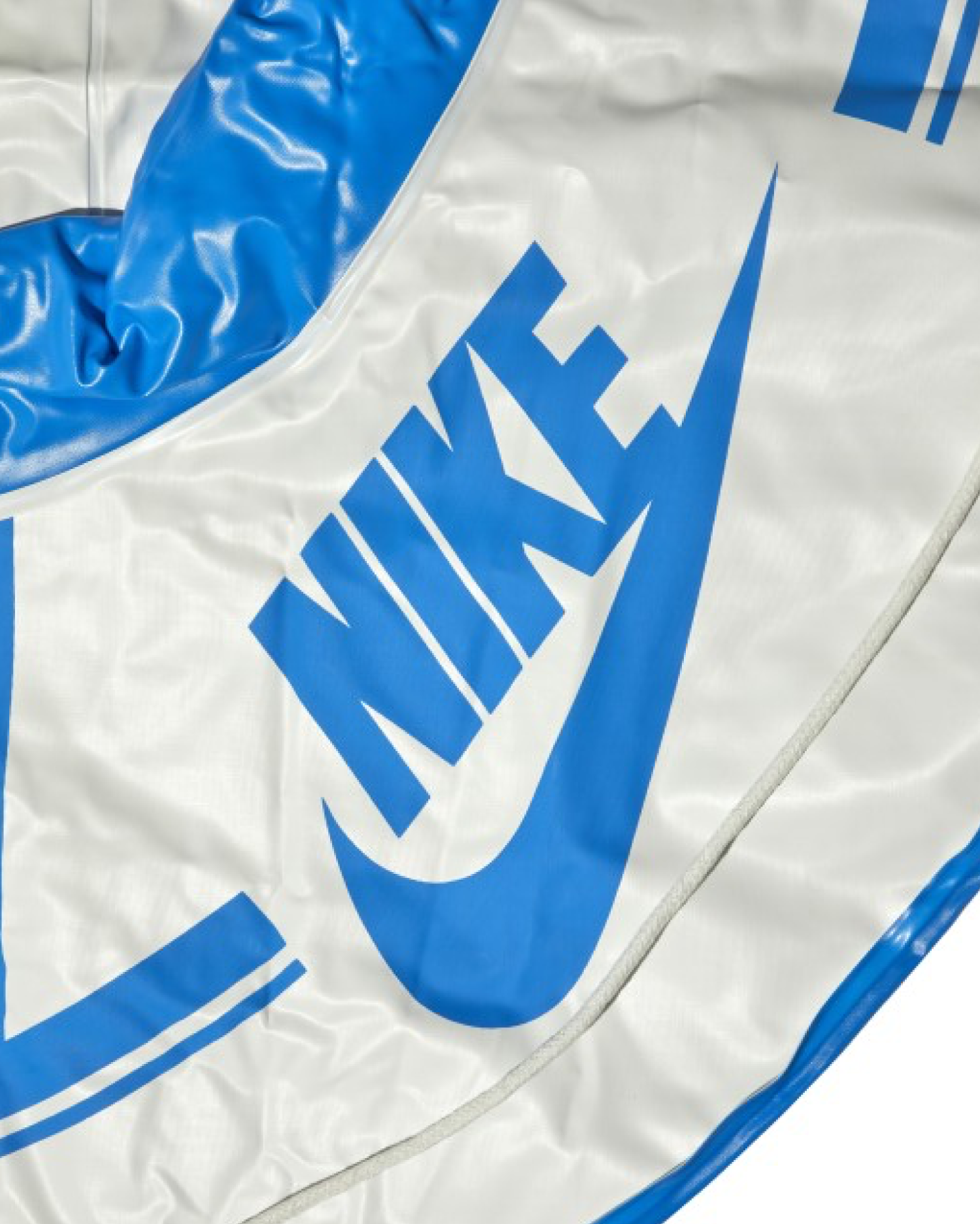
It’s a brand thinking beyond its logo and understanding the power of creativity in the brand merchandise it chooses to put into the world.
At first look, you’d probably ask: “why Nike would make an inflatable boat?”. It’s not an instantly obvious extension of the brand, or even a product anybody was waiting for. But that’s exaclty what makes it so interesting. After a minute, you start to get it. The idea starts to feel ‘right’. In fact, it feels like something Nike would make. That’s a difficult thing to achieve, and it’s a lesson far bigger than the boat itself.
One of the biggest misconceptions about brand merchandise is that success comes from finding another product to put a logo on. It’s an understandable way of thinking. Faced with an almost endless catalogue of products, the conversation naturally becomes one of selection. Which product is trending? Which fits the budget? Which offers the best value? They’re sensible questions, but they all begin in the same place: with the product.
The strongest brands begin somewhere else entirely.
They begin with an idea.
More specifically, they begin with an understanding of the people they’re creating for. The object isn’t chosen because it’s available. It’s chosen because it says something about the community surrounding the brand. It reflects a shared sense of humour, a lifestyle, an aspiration or a cultural reference that only really makes sense to the people who already belong. The product becomes less about utility and more about recognition. It quietly says, ‘We know who you are.’
This isn’t exclusive to Nike. It’s why brands like Palace, Carhartt and Supreme have become so interesting to watch. Palace can release an ice tray. Carhartt can produce a dog bed. Supreme can famously sell a brick. Taken out of context, none of those products make much sense. Viewed through the lens of the brand, however, they feel entirely natural. They aren’t random objects carrying famous logos. They’re authentic extensions of brands with a very clear point of view.
This is where creativity becomes such an important part of brand merchandise. Not because creativity makes something look different, but because it creates relevance. The most memorable branded objects don’t surprise people simply for the sake of it. They surprise people because they’re both unexpected and completely believable at the same time. That’s an incredibly difficult balance to strike, but when it happens, the object immediately becomes more than merchandise. It becomes part of the brand’s story.
Perhaps that’s also why these objects so often become collectible. People don’t queue for a Supreme brick because they need a brick, just as nobody buys a Palace ice tray because they were desperately short of a way to freeze water. They buy them because the object represents something beyond its function. It becomes another way of participating in the culture of the brand. Another way of expressing identity. Another piece of a story that people want to own.
I think that’s the distinction many businesses miss. The ambition shouldn’t be to create more merchandise. It should be to create something worth collecting. There’s a world of difference between an object that’s distributed and one that’s sought after. One exists because a marketing campaign needed a product. The other exists because somebody had an idea worth bringing into the world.
That’s why the conversation should never begin with, ‘What can we put our logo on?’ It should begin with a much more difficult question: ‘What would only our brand create?’ The answer won’t always be an inflatable boat, an ice tray or a dog bed. In fact, it probably shouldn’t be. But if the object feels so authentic that people instantly understand why your brand made it, you’ve already achieved something far more valuable than visibility.
You’ve created something worth talking about.