
Back From The Dead.
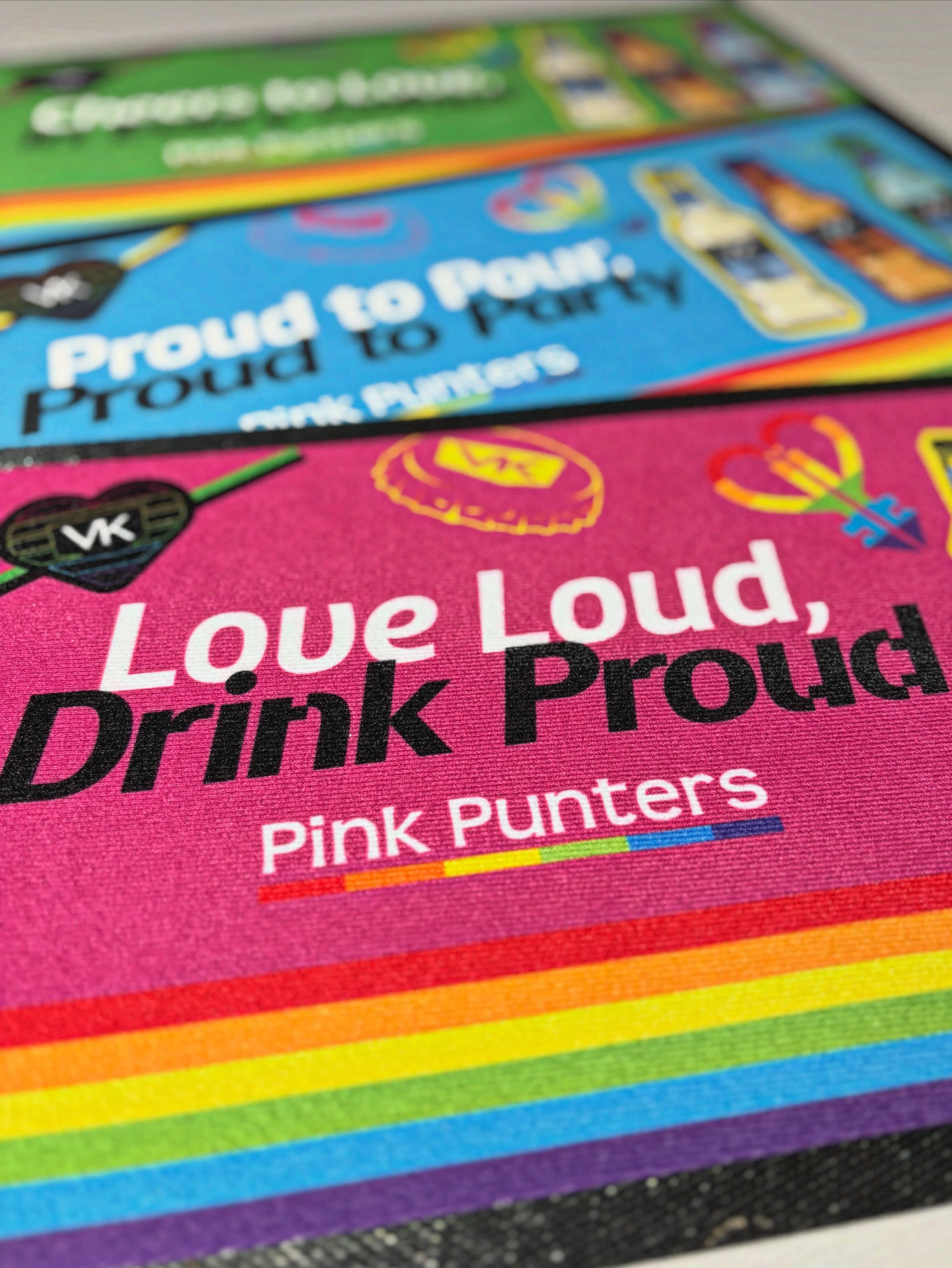
We told you here in 2021 that Fabric Bar Runners Are Dead (https://learay.co.uk/the-chop/fabric-bar-runners-are-dead). But just like baggy jeans and Converse All Stars, Fabric Bar Runners are actually, back.
In isolation, a fabric bar runner is an unremarkable object. It absorbs spills. It protects a surface. It sits, largely unnoticed, between bartender and guest.
But its quiet return to UK pubs, breweries and bars is not about functionality. It reflects a broader shift in how hospitality brands are thinking about space, identity and customer experience.
For much of the last decade, the industry optimised for efficiency. Materials that were durable, wipe-clean and uniform became the default. Rubber bar runners suited that logic perfectly. Fabric did not. It required maintenance, replacement and care - costs that were difficult to justify when margins were tightening and design trends favoured minimalism.
By the time the pandemic arrived, fabric runners had already faded from view. COVID merely completed the process, accelerating the removal of anything perceived as soft, tactile or difficult to sanitise.
Yet their reappearance today is deliberate.
Design as Brand Signal, Not brand Decoration.
Hospitality spaces are once again being treated as brand environments rather than operational backdrops. Independent pubs and craft breweries - often the earliest adopters of cultural shifts - are reintroducing fabric runners as part of a wider recalibration.
The reasoning is not nostalgic indulgence. It is strategic.
Fabric runners communicate intent. They soften the visual language of a bar. They introduce texture and warmth. They suggest a level of care that extends beyond pure utility. For brands operating in increasingly crowded markets, these signals matter.
Customers may not consciously register a bar runner, but they respond to how a space makes them feel. In that sense, fabric is not a retro flourish; it is a tool for shaping perception.
Branding That Belongs.
There is also a branding consideration that marketing teams increasingly recognise: not all brand assets need to announce themselves.
Fabric runners allow logos, illustration styles and typography to exist naturally within a space. Unlike high-contrast rubber or plastic alternatives, they do not compete with the environment. They belong to it.
For breweries in particular, where storytelling and provenance are central to brand value, this kind of integration reinforces authenticity. It suggests confidence - the ability to express identity without relying on volume or repetition.
The Value of Selective Complexity.
Fabric runners are not universally appropriate, and that is precisely why they are effective. Their return is concentrated in venues where experience is prioritised over throughput, and where brand equity is built over time rather than transactions alone.
This selectiveness mirrors a wider brand trend: a willingness to reintroduce complexity where it adds meaning. Not every decision must be optimised for speed or scale. Some are optimised for memory.
Small Objects, Larger Implications.
The renewed interest in fabric bar runners is not a reversal of progress. It is an adjustment. Hospitality brands are recognising that operational efficiency, while essential, is not the sole driver of loyalty or differentiation.
For marketing departments, the lesson is clear. Brand is not expressed only through campaigns or digital touchpoints. It is embedded in materials, textures and the quiet details of physical space.
Sometimes authority is not established by saying more, but by choosing carefully what to reintroduce - and why.
Why They Went.
The reasons are simple. Fabric absorbs spills - yes - but it also absorbs effort. It needs washing. It wears out faster than rubber. It isn’t practical for high-volume bars where speed matters more than style.
And design trends didn’t help. The 2010s saw bars become sleek, industrial, minimalist. Rubber runners blended in; fabric, with its texture and softness, felt out of step.
Then came the pandemic, and hygiene concerns gave the final nudge. Anything that couldn’t be wiped down easily was removed. Fabric’s decline was complete.
Why They’re Back.
But the pendulum swings. The pubs and bars where fabric runners are returning aren’t chasing practicality. They’re chasing atmosphere, identity, and authenticity.
A fabric runner doesn’t just protect a surface; it signals care. It adds warmth to a bar that might otherwise be cold and industrial. It introduces subtle texture. And it’s an understated way for breweries to express brand identity - logos, typography, illustrations that feel like part of the space rather than pasted on.
In an age when customers crave experiences, these small touches matter. People may not consciously notice the runner under their pint glass, but they notice the space feels intentional, curated, human.
A Lesson in Selectivity.
The return of fabric runners isn’t universal. High-traffic chains, nightclubs, and busy pubs still prefer rubber. And no one is arguing with efficiency. The comeback is concentrated in craft-led pubs, independent breweries, and taprooms. Places where the experience matters as much as the transaction. Where detail is part of brand identity.
It’s a small object with a surprisingly big message: brand is not only in campaigns or social media posts. It lives in materials, textures, and the deliberate choices a space makes. And sometimes, authority is conveyed not by adding more, but by thoughtfully reintroducing what was once taken away.
Why This Matters.
Fabric runners are quiet, almost invisible. But their resurgence speaks to a larger trend in hospitality - and in brand thinking. Spaces are being treated as part of the brand, not just as functional containers. The details matter, because people respond to feeling. And in a world crowded with choices, feeling intentional is a form of influence.
For anyone watching the UK pub and brewery scene, that’s a lesson worth noting: small objects, carefully chosen, can say more about a brand than any logo or tagline.