
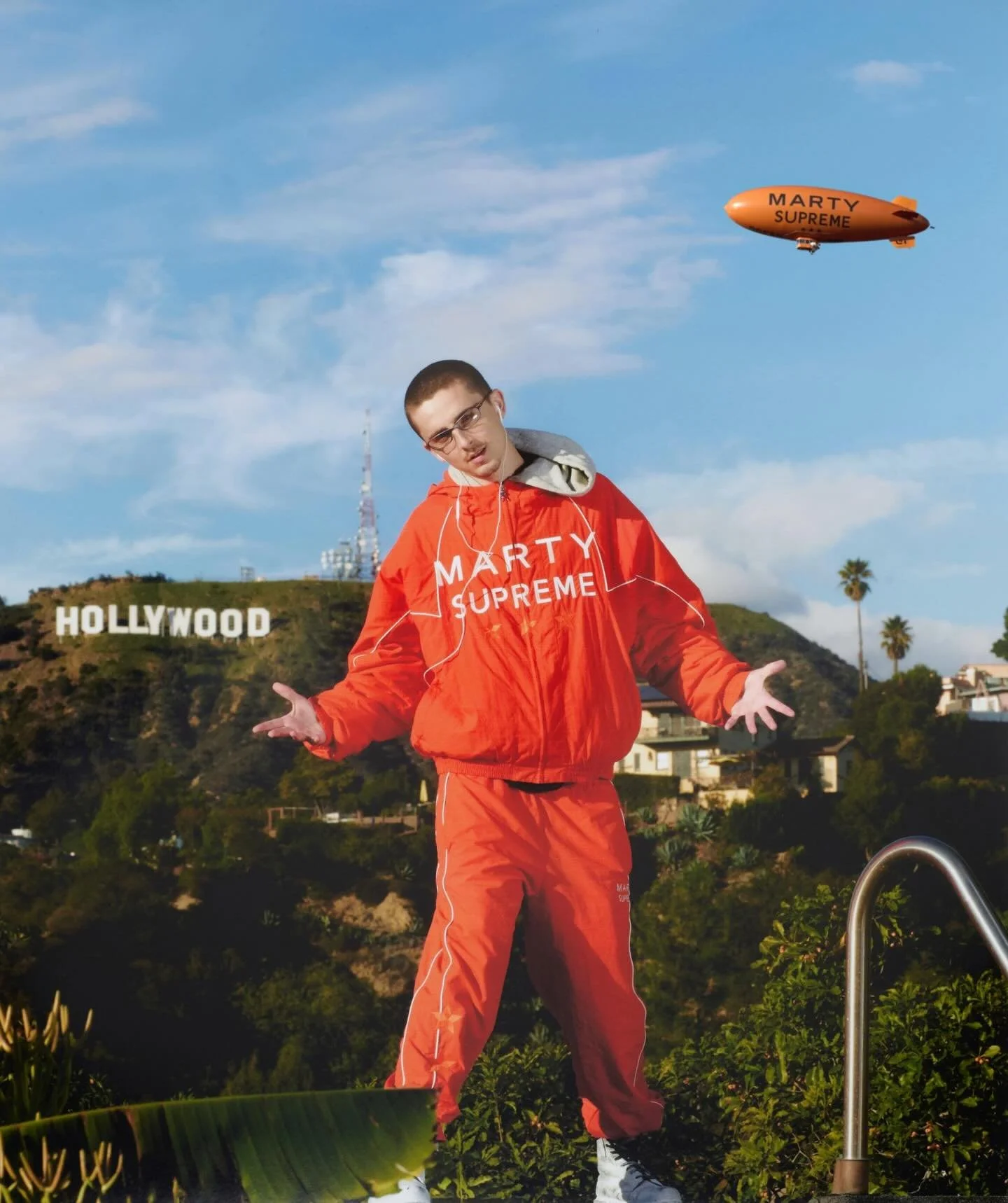
Marty Supreme, whatever you take it to be - a movie, a brand, a persona, a cultural signal - didn’t announce itself with billboards or splashy ad campaigns. It showed up instead on bodies. Famous bodies. On backpacks. On accessories. On tracksuits worn just a little too often to feel promotional. The merch came first; the story followed.
This is what we now call the Marty Supreme Effect: the quiet, almost accidental way a brand turns merchandise into its loudest form of marketing - without ever sounding like it’s marketing at all.
It usually starts small. A hoodie spotted at a coffee shop. A tote bag slung over a shoulder on the subway. A logo you don’t immediately recognize but somehow feel you should. You clock it, move on - and then see it again two blocks later. By the third sighting, curiosity has won.
Merchandise as conversation, not collateral.
For decades, merchandise was always an afterthought. A T-shirt you bought at the end of a concert. A free mug handed out at a conference. Marty Supreme flipped that logic. The merchandise is the message.
The pieces don’t scream. No bullet-point mission statements. No aggressive calls to action. Just designs and collaborations that feel intentional enough to invite questions. “Where did you get that?” becomes the most valuable marketing channel of all.
And that’s the key distinction: this isn’t about selling merch to make money. It was about selling identity to make meaning.
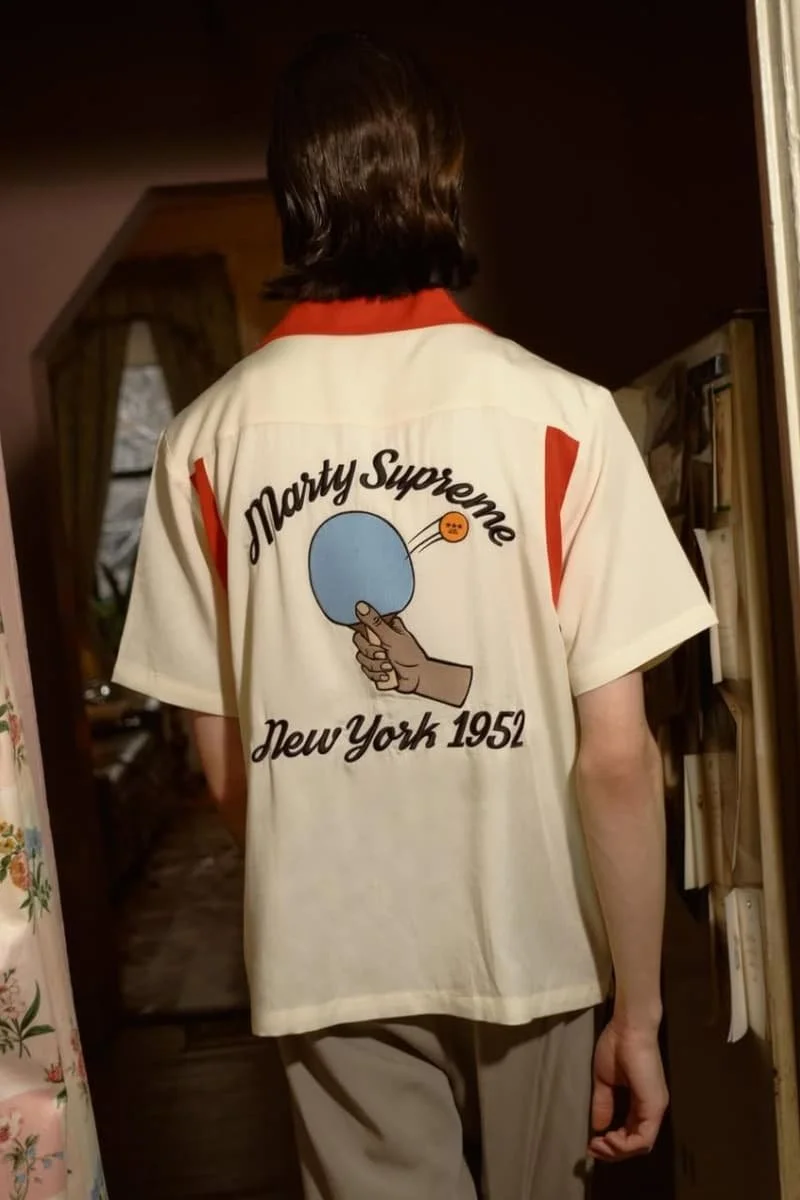
Wearing curiosity.
What Marty Supreme understands - perhaps instinctively - is that people like to wear things that make them feel in on something. The merch didn’t explain itself fully, and that ambiguity was the hook. If you knew, you knew. If you didn’t, you wanted to.
In a media landscape saturated with explanations, that restraint felt refreshing. The merchandise functioned like a wink rather than a speech. It created micro-moments of intrigue in grocery store lines and elevator rides, the kinds of moments algorithms can’t manufacture.
From object to signal.
At some point, the jacket stopped being a jacket. It became a signal - of taste, of alignment, of cultural awareness. Not in the flashy, logo-maximalist way of legacy luxury brands, but in a softer register. More human. More conversational.
That’s the effect: when merchandise moves beyond utility and becomes shorthand for a worldview. When wearing something feels less like advertising and more like participation.
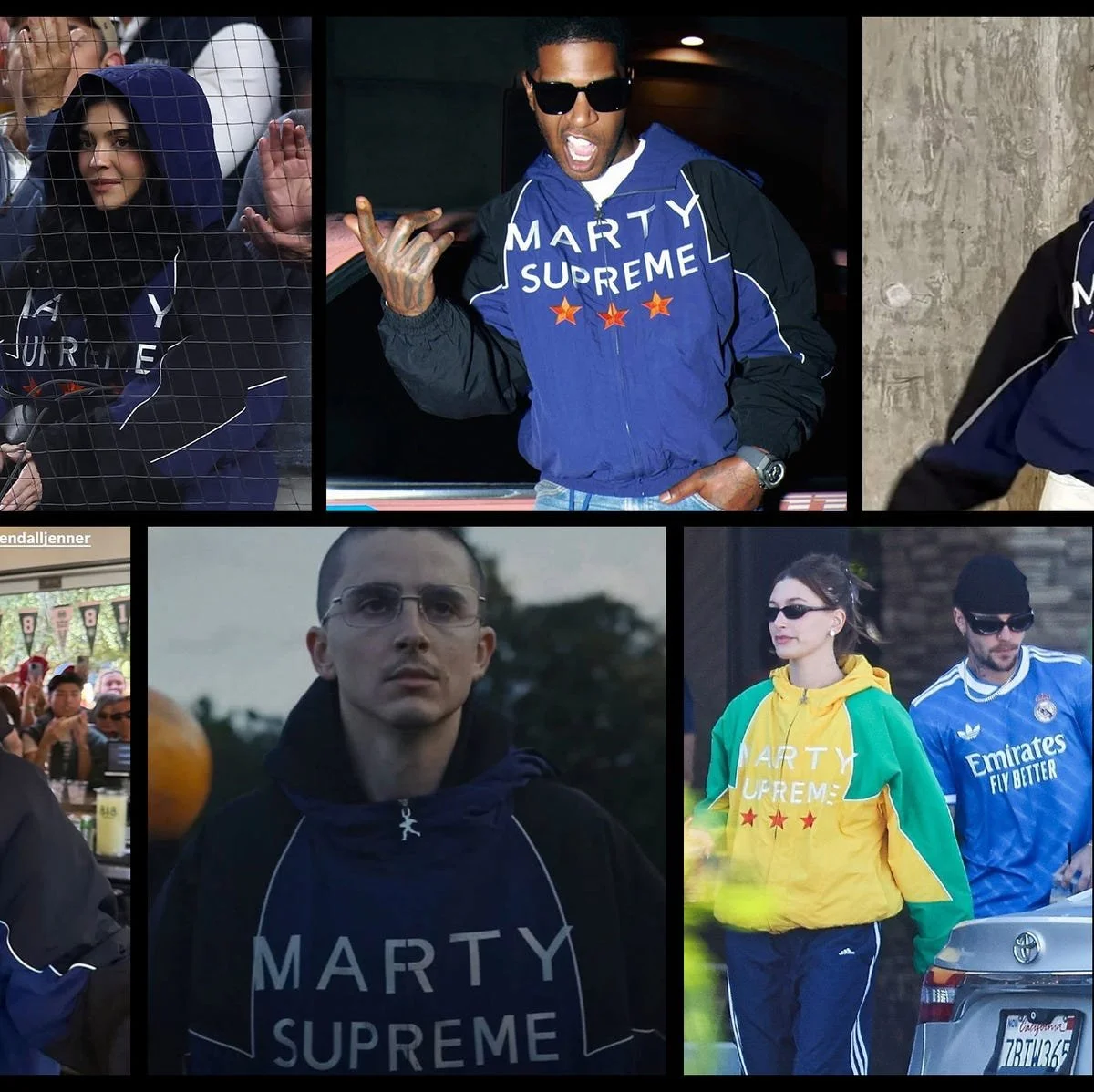
Why it works now.
The Marty Supreme Effect is especially potent in this era because trust is fractured. People don’t believe ads, but they believe people. A piece worn by someone you admire carries more weight than a thousand sponsored posts.
Merchandise, in this sense, becomes a Trojan horse. It bypasses skepticism because it doesn’t look like persuasion. It looks like life.
The “SUpreme” Magic Formula.
The effect isn’t about scarcity or style alone. It’s about intention. Look at Supreme.
The merch works because it feels earned, not extracted. Because it offers belonging without begging for attention. Because it respects the intelligence of the person wearing it - and the one noticing it.
In the end, the Marty Supreme Effect is all about understanding that awareness doesn’t have to be loud to be lasting. Sometimes, the most powerful brand statement is a simple one, worn casually, walking past you on the street - inviting you, gently, to ask a question.
And the next question is - how does your brand leverage this?